
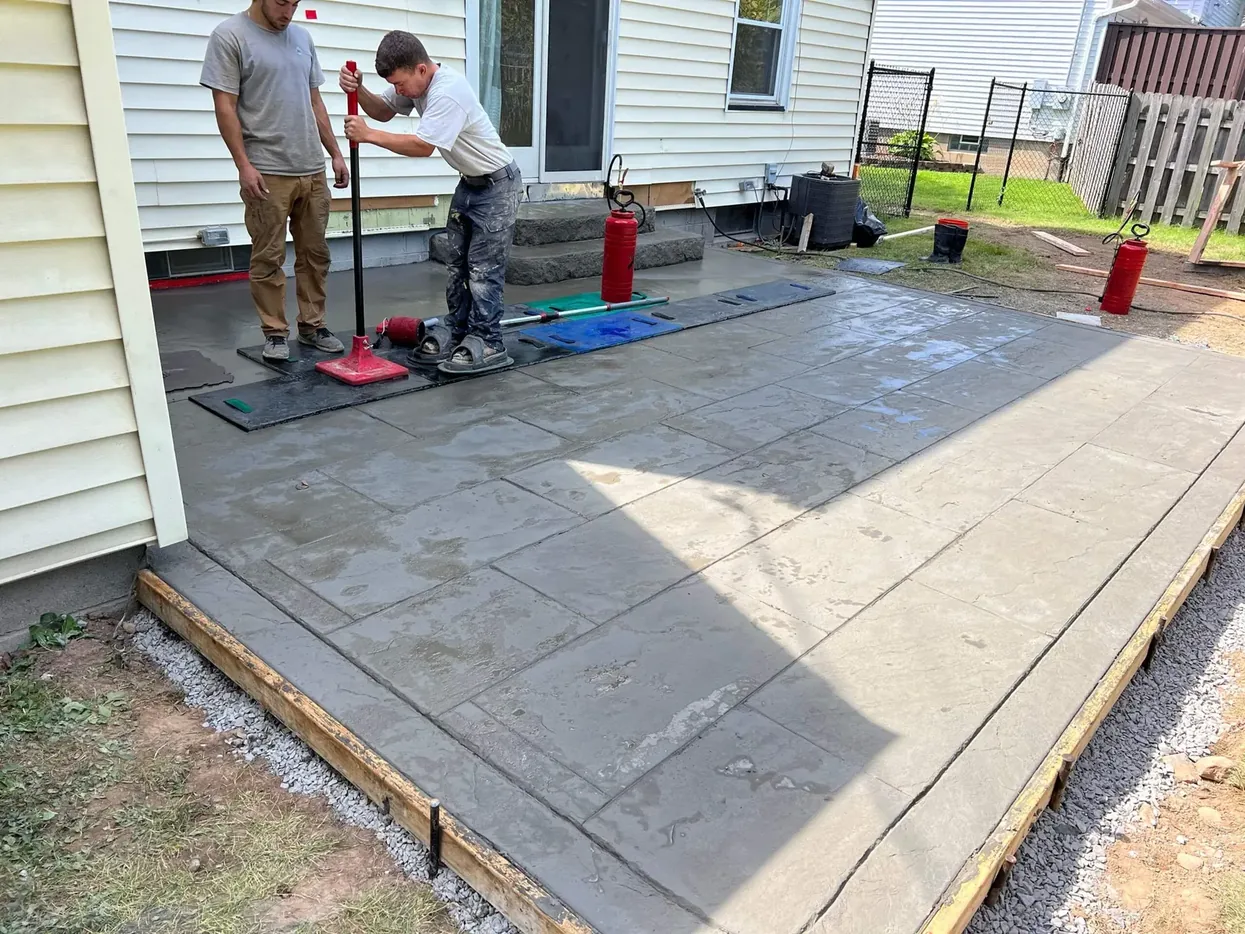
How Much Does It Cost to Extend a Concrete Patio or Driveway in Texas?
One national cost guide puts a concrete patio extension at $4 to $30 per square foot. That is the same price it gives for a new patio. For a driveway, one cost estimator puts adding onto an existing concrete driveway at $8 to $12 per square foot. That runs a bit higher than new driveway concrete. A national guide lists a standard new driveway at $6 to $10 per square foot. The extra covers matching the new slab and securing it to the old one.
These are national market numbers, not our price list. Daly Concrete Solutions builds concrete patio and driveway extensions in Denton and the towns around it. On a North Texas job, the size of the addition moves the number. So do the clay under it and the tie-in to the old slab. Every job gets its own free quote in writing.
What does a concrete patio extension cost?
One national cost guide gives the cost to extend a concrete patio its own section. It prices an extension the same per square foot as a new patio: $4 to $30. The range spans plain and decorative work. The guide lists plain concrete at $4 to $12 per square foot installed. Stained or stamped concrete runs $8 to $30.
The new area still needs grading, along with a sand or gravel base below the concrete. The guide says most residential patios should be at least 4 inches thick. One that holds a hot tub or an outdoor kitchen should be 6 inches thick, with more reinforcement.
A 10 by 12 foot addition is 120 square feet. At the guide’s $4 to $30 per square foot, that is $480 to $3,600 (our plain arithmetic, not a quote). In plain concrete at $4 to $12, it is $480 to $1,440.
Small additions can cost more per square foot. The guide notes that many contractors have minimum project fees that affect smaller installations. For new patio prices by size, see what a new concrete patio costs in Texas.
What does a driveway extension or widening cost?
One cost estimator puts extending an existing concrete driveway at $8 to $12 per square foot. Its examples include an extra parking space and a spot for an RV or a trailer. Matching the new slab to the old one and securing it adds work. Driveway widening is one of the concrete additions we build.
These published ranges are market numbers, not our price list:
| Cost item | Published market range |
|---|---|
| Concrete patio extension (one national cost guide) | $4 to $30 per square foot |
| Rebar or wire mesh reinforcement, added | $1 to $3 per square foot |
| Adding onto an existing concrete driveway (one cost estimator) | $8 to $12 per square foot |
| Standard new concrete driveway, for comparison | $6 to $10 per square foot |
| New concrete driveway, overall range | $6 to $15 per square foot |
| New 2-car concrete driveway, total | $2,400 to $8,600 |
A 4 by 40 foot strip along a driveway is 160 square feet. At the estimator’s $8 to $12 per square foot, that is $1,280 to $1,920 (our plain arithmetic, not a quote).
An RV pad may need a thicker slab. A national driveway cost guide says pros recommend 5 to 6 inches for heavier vehicles like RVs. For new driveway prices, see what a new concrete driveway costs in Texas.
How does new concrete tie into the old slab?
A concrete technical guide calls for a 1/2-inch full-depth isolation joint against the old edge. The new slab matches the old one’s thickness and height. On driveways, smooth dowels drilled and epoxied into the old slab keep the two slabs flush. Side-by-side slabs are never glued together, the guide says. A bonding agent is only for concrete poured on top of old concrete. The guide follows the concrete industry’s joint guidance.
Joint lines matter too. One concrete association’s jointing checklist says to match existing joints or cracks. Ready-mix industry guidance calls for isolation joints where a driveway meets a walk or a curb. It also says a slab and the ground under it should be sloped for proper drainage.
North Texas clay is why the base and the joint matter. Sanger clay, a Denton County soil series, has high shrink-swell potential in USDA soil records. When it dries, it cracks 1 to 3 inches wide from the surface. Old and new slabs on that clay can move differently, so the joint has to allow for it.
When is extending the wrong fix?
An extension ties into the slab you already have, so that slab has to be sound. If the old patio or driveway is sinking or broken, new concrete beside it leaves the problem in place. Then concrete removal and replacement at the new size can be the better job.
Will new concrete match the old?
The height and the joint lines can match. Color is harder. One guide on matching new concrete to old says a perfect match can be challenging. Even slight variations in the sand, cement or aggregate can change the color. A power-washed old slab may still look different from the new one.
Weather may bring the two closer, but that guide says it can take years, with results unlikely to be uniform. Stain on both slabs can help even out the color, it adds, and concrete staining is one of our services. Plan on some difference. The written quote says what is planned for the new section’s finish.
Do you need a permit to extend a driveway or patio?
Rules differ by city, and the city is the one to ask. Here are two North Texas examples.
In Sanger, the City’s Flatwork permit form asks for the size of the concrete work. It goes in with a site plan showing all the measurements. The form also says a permit does not exempt or modify covenants or deed restrictions. An HOA’s rules are a separate question.
In Saginaw, the City’s paving form sets a drive approach at 11 to 18 feet wide. That is the part of a driveway that meets the street. Saginaw allows no more than two drive approaches per property.
Before you widen a driveway at the street, ask your city what it allows. The city answers that question, and we point you there.
What else drives the price of a concrete extension?
- Size. The total grows with the square footage.
- Access for the truck. One national guide says poor drainage, slopes and limited access for equipment raise labor costs.
- Removing an old border or strip. A national guide puts removing an old driveway at $2 to $6 per square foot.
- Thickness. A thicker slab for heavier loads costs more.
- Reinforcement. Rebar or wire mesh adds $1 to $3 per square foot in one national guide.
- Finish. Stamped or colored work costs more than plain gray concrete. One national guide prices a stamped concrete driveway at $8 to $26 per square foot.
How do you get a real number for your extension?
The ranges above are market numbers from national cost guides and one cost estimator, not our price list. Your number depends on the size, the ground, the tie-in and the finish. We look at the old slab and the ground beside it, then put a free quote in writing. See how we build concrete extensions and additions in Denton and the area, then call or text (940) 217-6028.