
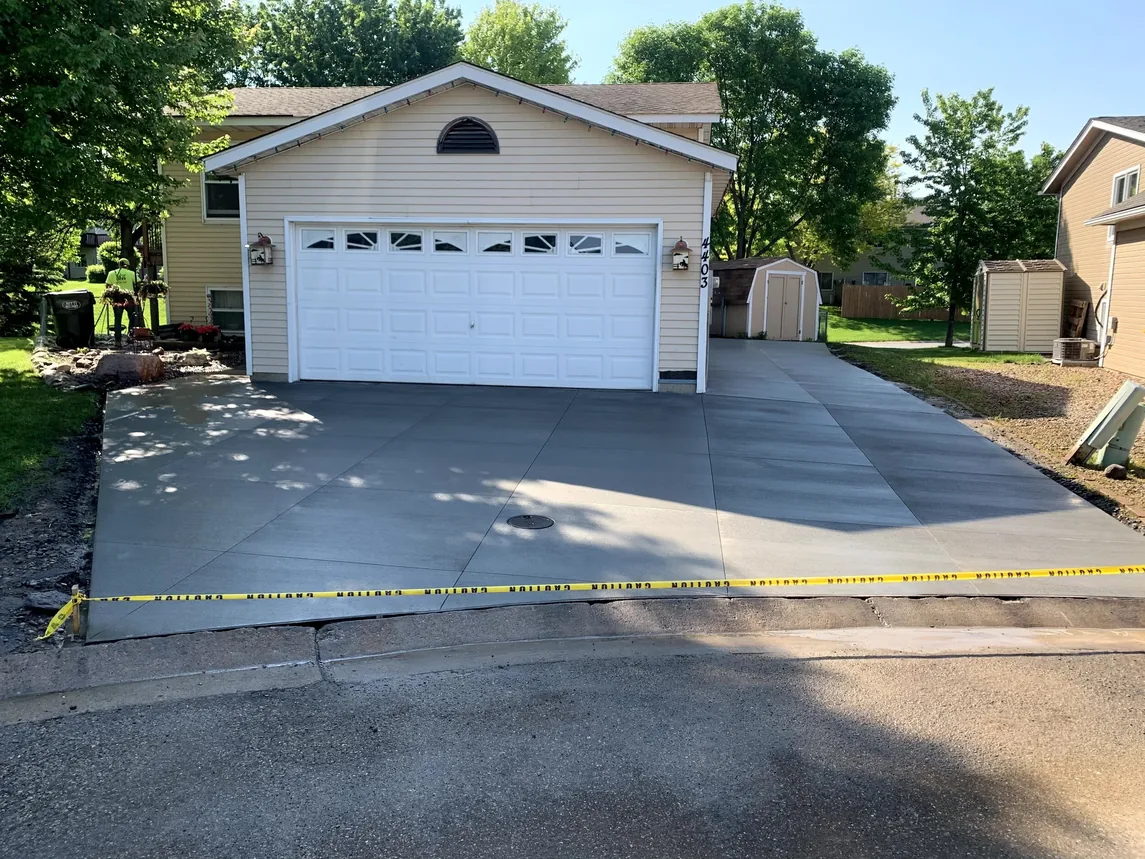
Concrete vs Asphalt Driveway: Which Is Better for a North Texas Home?
For most North Texas homes, concrete is the better long-term driveway. Asphalt costs a little less to put in. A national cost guide puts asphalt at $5 to $12 per square foot installed and concrete at $6 to $15.
Concrete makes up for that gap over time. The same guide says most concrete driveways last 30 to 40+ years, while asphalt lasts 15 to 30. Concrete also needs less routine upkeep. It stays cool in hot weather. That is why the guide rates it better for warm climates, and asphalt better for cold ones.
These are market numbers, not our price list. Daly Concrete Solutions pours concrete driveways for homes in Denton and the towns around it. We pour concrete only and do not install or seal asphalt.
How much does a concrete driveway cost vs asphalt?
One national cost guide gives these market ranges side by side:
| What the guide lists | Asphalt driveway | Concrete driveway |
|---|---|---|
| Installed cost per square foot | $5 to $12 | $6 to $15 |
| Lifespan | 15 to 30 years | 30 to 40+ years |
| Curing time before use | 1 to 3 days | 7 to 30 days |
| Repair cost | $250 to $800 | $300 to $3,000 |
| Sealing a 1- to 2-car driveway | $290 to $800 | $290 to $1,700 |
Asphalt usually costs less up front, but the two ranges overlap. Asphalt also goes in faster and is easier to repair, the guide says. A concrete repair can cost much more: up to $3,000, against $800 for asphalt.
The first bill is only part of the picture. The repair and sealing rows show what each surface costs to keep up. For the concrete side in more detail, see our post on concrete driveway cost in Texas. If concrete is your pick, start with our concrete driveway service.
How long does a concrete driveway last compared to asphalt?
Concrete usually lasts longer. The guide gives most concrete driveways 30 to 40+ years and asphalt 15 to 30 years. At the low end of each range, concrete lasts twice as long.
The two surfaces wear in different ways. Asphalt is softer and breaks down faster, the guide says, so it needs more upkeep. Concrete does not flex, which makes it more durable. When it does break, the fix costs more.
Asphalt lasts longer with good care. The guide’s tips include proper drainage and a new seal every 3 to 5 years.
Which driveway handles Texas heat better?
Concrete does. Dark pavements get hot in the sun because they absorb 80 to 95 percent of sunlight, a national lab reports. The same lab says new concrete reflects 30 to 50 percent of sunlight.
Both surfaces change as they age. Concrete tends to darken with tire and grease stains, so it reflects less: 20 to 35 percent. Asphalt starts near 5 percent and lightens to reflect 10 to 20 percent as it ages. The cost guide sums it up: asphalt can get extremely hot in summer, while concrete stays cool.
Asphalt has a real edge in the cold. The guide says asphalt handles freeze-thaw cycles better, and concrete can crack in freezing temperatures. That is why the guide favors asphalt for northern driveways. Freezes do reach North Texas, so the edge is real here, just smaller than up north.
What does North Texas clay do to a driveway?
The ground under a driveway matters as much as the surface on top. Around Denton, a common soil is Sanger clay. USDA soil records rate it high for shrink-swell. When it dries out, it cracks 1 to 3 inches wide.
Clay like that swells when it gets wet and shrinks as it dries. Asphalt and concrete both ride on that movement. A firm, compacted base and water that drains away from the driveway help either one.
Some cities set rules for the part near the street. In Roanoke, the City’s right-of-way permit calls for at least 98 percent compaction in the right-of-way. The City’s residential permit packet says approaches and pavement there must be approved before any concrete pour. Your own city’s permit office can tell you what applies on your street.
When a concrete section does break, our fix is removal and repour. The broken section comes out, and new concrete goes in. That is concrete repair and replacement work. Our guide on repairing or replacing a driveway helps you weigh a repair against a new slab.
How much upkeep does each driveway need?
Asphalt needs more routine care. The guide says it needs resealing every 3 to 5 years, though it is easy to repair. Those reseals come around again for as long as the driveway lasts.
Concrete asks for less. The guide lists occasional degreasing, with sealing optional. Tire and grease stains do build up on concrete over time, so a wash now and then helps.
The guide puts sealing a 1- to 2-car driveway at $290 to $800 for asphalt. For concrete, it lists $290 to $1,700. If you want concrete sealed, we pressure wash it first, then apply a penetrating concrete sealer. That is our concrete cleaning and sealing service.
How soon can you drive on a new driveway?
Asphalt is ready sooner. The guide lists a curing time of 1 to 3 days for asphalt and 7 to 30 days for concrete. Pouring a concrete driveway itself takes about 1 to 3 days, not counting that cure.
Plan for the wait before the pour. Pick a spot for the cars while the new concrete cures.
Which driveway looks better?
Looks come down to taste, but concrete offers more choices. The guide calls concrete highly customizable. It describes asphalt as typically black, with limited customization options.
Concrete can take a pressed pattern or a color stain. See stamped concrete for patterned finishes. Those extras raise the price, since the guide notes that prices run higher for decorative colors, borders and stamped patterns.
Which driveway is right for your home?
Asphalt fits when the up-front price matters most or you need the driveway back fast. Concrete fits when you plan to stay a while and want a cooler surface with less upkeep. For most North Texas homes, we think concrete is the better fit.
Daly Concrete Solutions handles new concrete driveways and driveway replacement across Denton and the towns around it. We look at the job and put a free quote in writing. Call or text (940) 217-6028.